Enter your email address
Submit

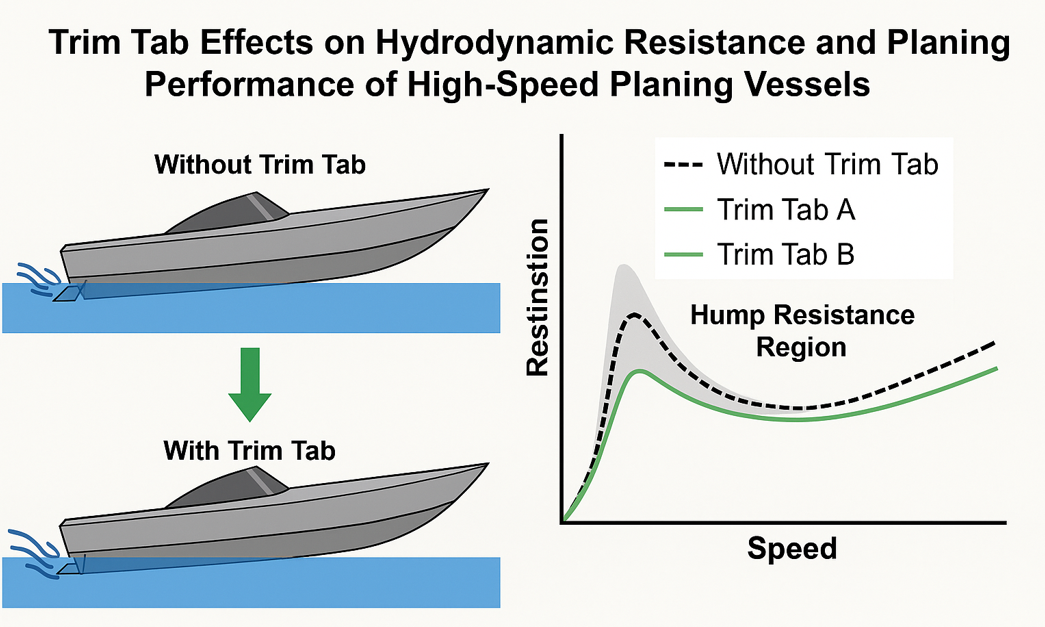
 Experimental and Theoretical Investigation of Trim Tab Effects on Hydrodynamic Resistance and Planning Performance of High-Speed Planning Vessels
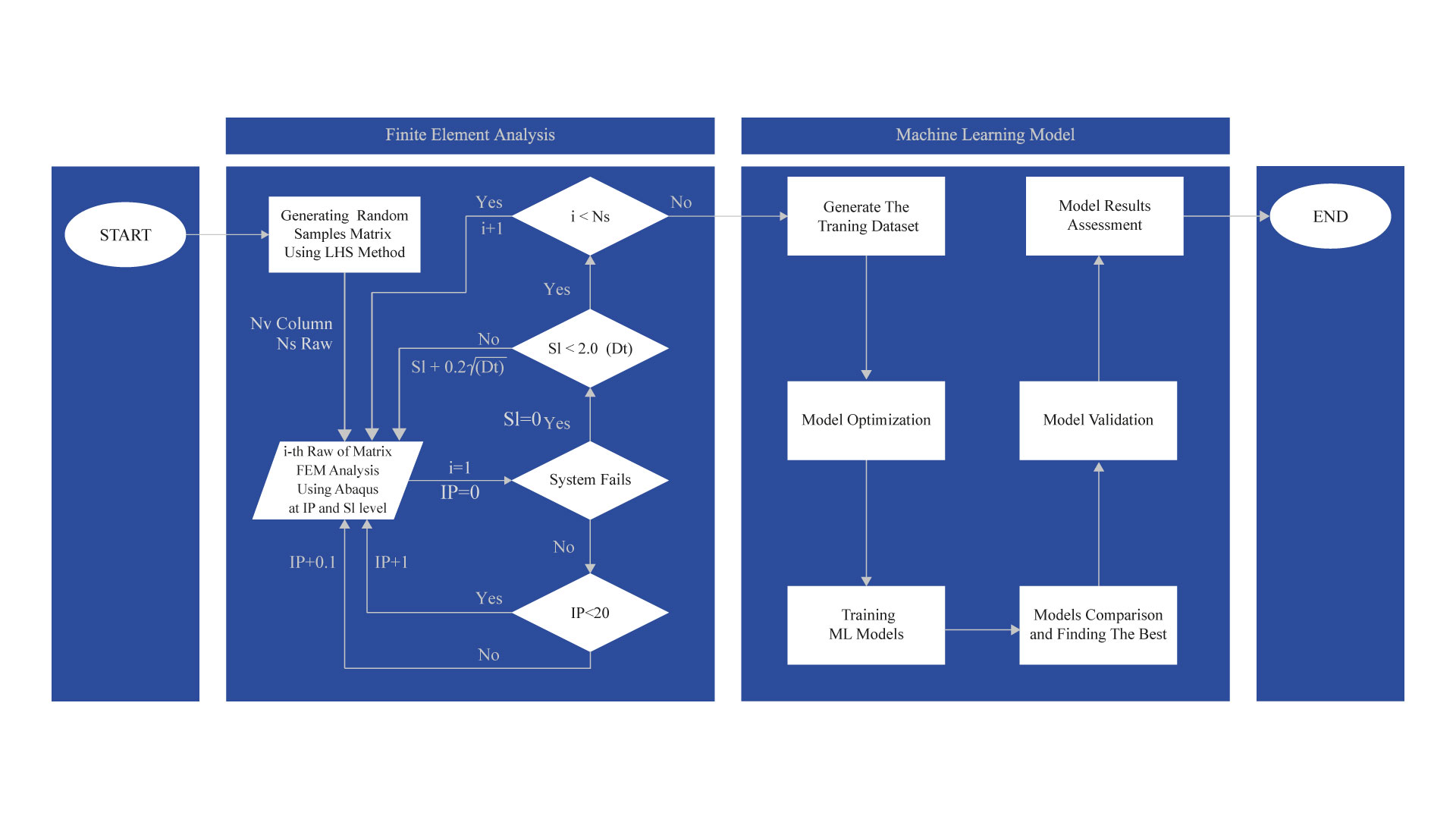
 Machine Learning Models Development to Predict Corroded Pipeline Behavior Considering Defects Interaction
 Reconciling Per-Capita Water Metrics with Aquifer Stress on Qeshm Island: Pathways for Coastal Blue Economy Development
 Designing an Optimal PID for Heading Control of a linearized High Speed container ship using Adaptive Particle Swarm Optimization Algorithm

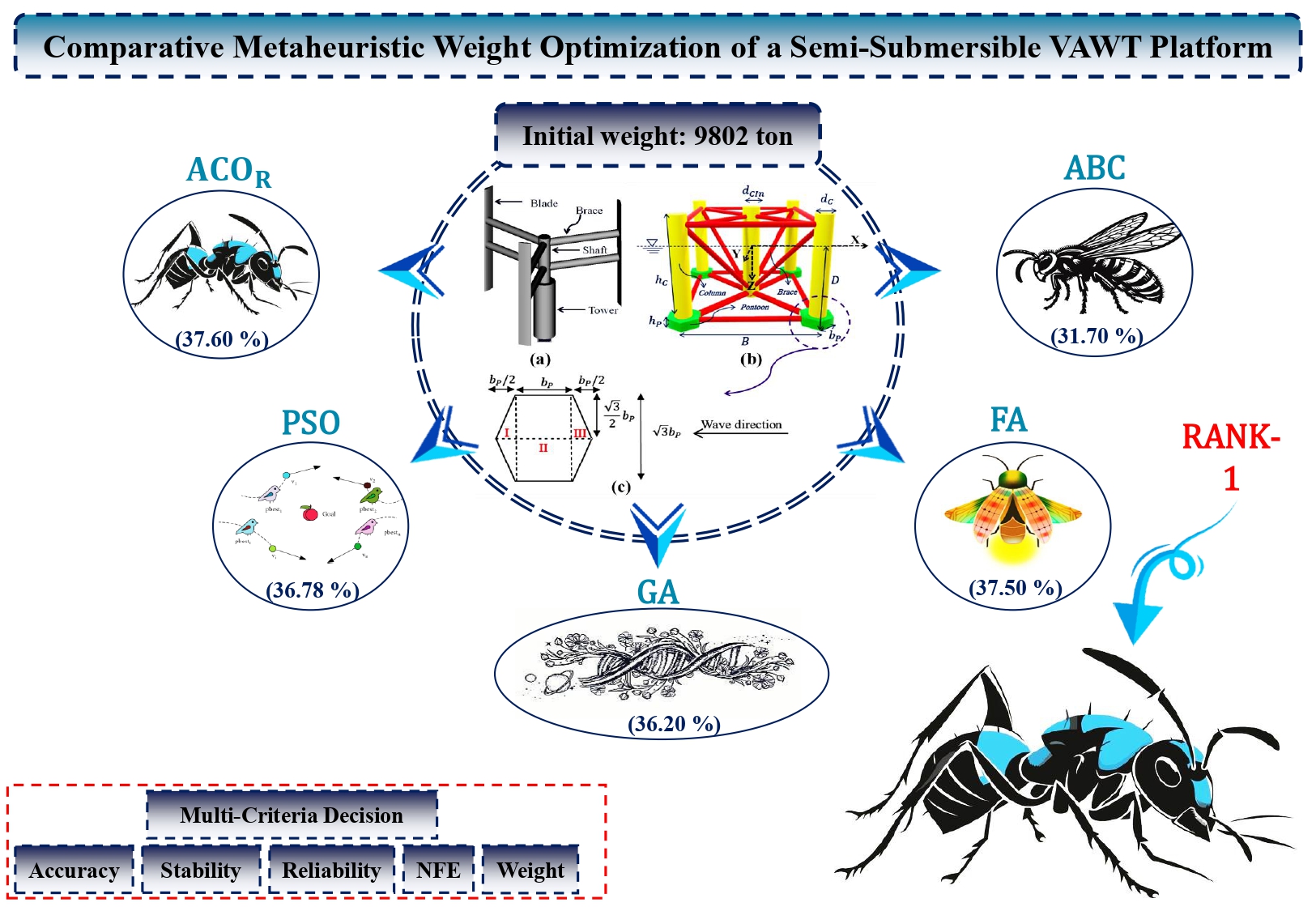
 Comparison of Metaheuristic Algorithms for Weight Optimization of a Semi-Submersible VAWT Substructure with Hexagonal Pontoons


International Journal of Maritime Technology is licensed under a
Creative Commons Attribution-NonCommercial 4.0 International License.